What is fintech?
Payment apps, digital banks and pay-later buttons all wear the same label. Underneath, they still depend on banks, card networks and regulators.
On this page
- Fintech is short for financial technology: new technology used to deliver financial services such as payments, lending, saving and investing.
- The Financial Stability Board defines it as technology-enabled innovation in financial services that can materially affect markets, institutions and how services are provided.
- Most consumer fintech apps are not banks; they rely on partner banks and card networks to hold and move money.
- The FDIC states that non-bank companies are never FDIC-insured, so money held by an app can be less protected than a bank deposit.
- The CFPB found in 2023 that more than 75% of US adults use payment apps.
Fintech, short for financial technology, is the use of software, data and the internet to deliver financial services: payments, lending, banking and investing. It includes start-up apps, big tech firms and banks' own digital products. Many fintech apps are not banks themselves and depend on partner banks behind the scenes.
What does "fintech" actually mean?
Fintech is a contraction of financial technology. In everyday speech it means two things at once: the technology itself (mobile apps, cloud software, data analysis, faster payment rails) and the companies that build financial products with it.
Regulators use a tighter definition. The Financial Stability Board (FSB) describes fintech as technology-enabled innovation in financial services that could create new business models, applications, processes or products with a material effect on financial markets, institutions and the way financial services are provided. The key idea is effect: a new app counts as fintech in the regulatory sense because it changes how money moves, who lends it, or who holds it.
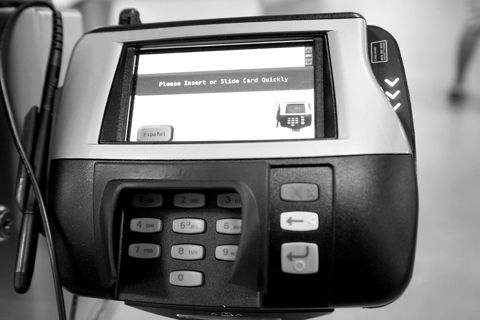
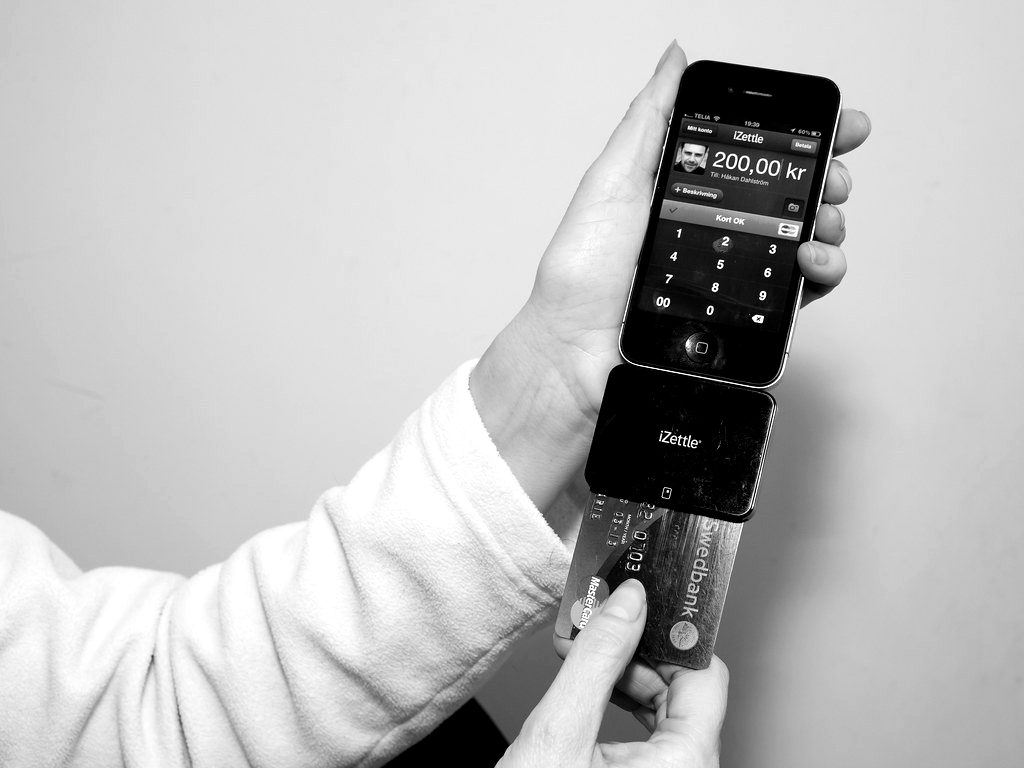
That is why the label is so broad. A budgeting app, a card terminal on a phone, a robo-advisor and a central bank's new instant payment system can all be described as fintech, even though they carry very different risks.
What are the main types of fintech?
Grouping fintech by what it does to your money makes it easier to see which rules apply. Each row links to a deeper guide.
| Area | What it does | Question to ask |
|---|---|---|
| Payments | Moves money between people and businesses: payment apps, mobile wallets, instant payment systems | Where does my balance sit while it waits? |
| Digital banking | Accounts and cards through an app: digital banks and bank-partner apps | Is the provider a bank, or partnered with one? |
| Lending | Credit decided by automated checks: buy now, pay later, online loans | What happens if I pay late? |
| Data sharing | Apps read your bank data with consent: open banking | What can the app see, and how do I revoke it? |
| Investing | Automated portfolios: robo-advisors | What is the total yearly cost? |
| Public money | Central banks digitizing payments: CBDCs, public instant payments | Who issues the money I hold? |
The FSB's own work also covers RegTech (technology firms use to meet regulatory duties), SupTech (technology supervisors use), BigTech firms entering finance, and tokenization. Crypto-assets and stablecoins are often grouped under fintech too.
How does a fintech app reach your money?
Most consumer fintech apps sit on top of the existing system rather than replacing it. When you open an account in a typical app that is not itself a bank, the company usually has a contract with one or more licensed banks that hold the customers' money, and with a card network that processes card spending. The app owns the design and the customer relationship; the bank holds the deposits; the network moves the card transactions.
The FDIC explains that non-bank companies can arrange for customer funds to be placed in insured bank accounts, but that the non-bank itself is never FDIC-insured. Deposit insurance pays out if an insured bank fails. It does not pay out because the app company in front of it fails.
How widely is fintech used today?
Official figures show how ordinary fintech has become. The US Consumer Financial Protection Bureau (CFPB) found in June 2023 that more than 75% of US adults use payment apps, rising to 85% among 18- to 29-year-olds. In the UK, the Financial Conduct Authority reported more than 16 million open banking users by December 2025.
Public infrastructure has changed too. The Bank for International Settlements reported in December 2024 that over 100 jurisdictions had launched fast payment systems, services that, as the BIS payments committee describes them, make funds available to the payee immediately and work around the clock.
What protections change when you use a fintech app?
Speed and convenience are real benefits. The trade-off is that protections depend on the provider's license, and that is not always obvious from the app's design.
- Deposit insurance. The FDIC covers up to $250,000 per depositor, per insured bank, per ownership category, and only for deposits. It does not cover stocks, mutual funds or crypto-assets, even if you bought them in a banking app. See digital banks vs traditional banks.
- Who you complain to. A licensed bank, a payment firm and an investment adviser each answer to different regulators.
- Data. Apps that read your accounts collect detailed spending data. Check what you have shared and how to withdraw consent.
- Identity checks. Regulated providers must verify customers under KYC and anti-money-laundering rules; an app that skips them is a warning sign.
What mistakes do beginners make with fintech?
- Assuming every app is a bank. Many are technology companies with a bank partner. Check the terms or the small print for the name of the bank that actually holds the money.
- Leaving large balances in a payment app. Treat a payment app balance like a wallet, not a savings account.
- Confusing "FDIC-insured" with "investments insured". Deposit insurance covers deposits only.
- Granting data access and forgetting it. Review connected apps in your banking settings from time to time.
- Skipping two-factor login. Turn on two-factor authentication and learn the common scam patterns.
Questions readers ask
Is fintech the same as crypto?
No. Crypto-assets are one part of the wider fintech field. Most fintech, such as payment apps, digital banking and pay-later loans, works with ordinary currency through banks and card networks. See what is cryptocurrency.
Are fintech companies regulated?
Usually, but by activity rather than by the label. A firm that takes deposits needs a banking license; one that moves money may need a payments or money-transmitter license; one that gives investment advice is regulated as an adviser. Check the official register for the exact license.
Is my money in a fintech app FDIC-insured?
Only if the app places it as a deposit at an FDIC-insured bank and the conditions for pass-through coverage are met. The FDIC states that non-bank companies themselves are never FDIC-insured, and insurance does not cover the failure of the app company.
Do banks use fintech too?
Yes. Banks build their own apps and buy software from fintech firms. The line between "bank" and "fintech" is about the license and who holds your money, not about how modern the app looks.
Fintech is a broad label for financial services delivered through new technology, from payment apps to automated investing. Behind most apps sit the same banks, card networks and regulators as before. Before you use one, find out which company is licensed for what and where your money is actually held.
Sources
- Financial Stability Board, FinTech (2024)Primary source
- Federal Deposit Insurance Corporation, FDIC Consumer News: Banking with apps (November 2020) (2020)Primary source
- Federal Deposit Insurance Corporation, Understanding Deposit Insurance (2025)Primary source
- Consumer Financial Protection Bureau, CFPB Finds that Billions of Dollars Stored on Popular Payment Apps May Lack Federal Insurance (2023)Primary source
- Bank for International Settlements, BIS Papers No 152: Faster digital payments — global and regional perspectives (2024)Primary source
- Committee on Payments and Market Infrastructures (BIS), Fast payments – Enhancing the speed and availability of retail payments (2016)Primary source
- Financial Conduct Authority, Open banking: a year of progress (2025)Primary source
Educational content only — not financial, investment, legal or tax advice. Crypto-assets are high-risk and you could lose all the money you put in. Rules differ by country; check with your national regulator. See our risk disclosure and editorial policy.
Read next
- Fintech · Beginner
Digital banks vs traditional banks
Licensed bank or app with a partner bank? What it means for deposit insurance and failures.
- Fintech · Beginner
How do card payments work?
Issuer, acquirer and network explained, plus who pays interchange and how disputes work.
- Fintech · Beginner
What is open banking?
How consent-based bank data sharing and pay-by-bank work, and the rules in the UK, EU and US.
- Stablecoins & Payments · Beginner
What is a stablecoin?
Tokens designed to stay at $1: what backs them, how redemption works, and why runs happen.