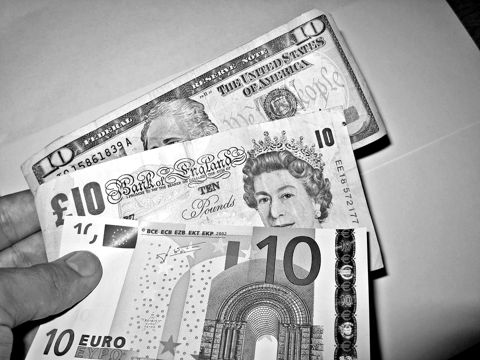
How do card payments work?
A card tap takes a second, but it sets off a chain involving four or five companies and two separate stages: approving the payment and actually moving the money.
On this page
- A card payment involves the cardholder, the merchant, the merchant's bank (acquirer), the cardholder's bank (issuer) and a card network.
- Approval happens at the till in seconds; clearing and settlement, when money actually moves between banks, can follow later.
- Interchange fees flow from the merchant's bank to the card issuer and are built into what merchants pay to accept cards.
- In the US, Regulation II caps debit interchange at large issuers at 21 cents plus 0.05% of the sale, plus up to 1 cent for fraud prevention.
- Federal law limits liability for unauthorized credit card charges to $50; debit card limits depend on how fast you report.
When you pay by card, the merchant's bank sends the request through a card network to your bank, which approves or declines it in seconds. Later, in clearing and settlement, the banks exchange transaction details and money. Your bank then bills you (credit) or has already debited your account (debit).
Who is involved in a card payment?
A card looks like a simple deal between you and a shop. In fact, a Federal Reserve Bank of Philadelphia tutorial on card clearing describes five parties in a typical transaction:
- Cardholder: you, the person or business paying.
- Merchant: the shop or website accepting the card.
- Acquirer: the merchant's bank, which signs the merchant up to accept cards and sponsors it into the network.
- Issuer: your bank or card company, which issued the card, holds your account and decides whether to approve each payment.
- Card network: the scheme whose logo is on the card. It carries messages between acquirers and issuers and organizes settlement between them.
Payment processors and fintech card terminals often sit between the merchant and the acquirer, but the core chain stays the same. That is why a small café using a phone-based card reader can accept the same card as a supermarket.
What happens between the tap and the money arriving?
The process has three stages, and only the first one happens while you wait at the till.
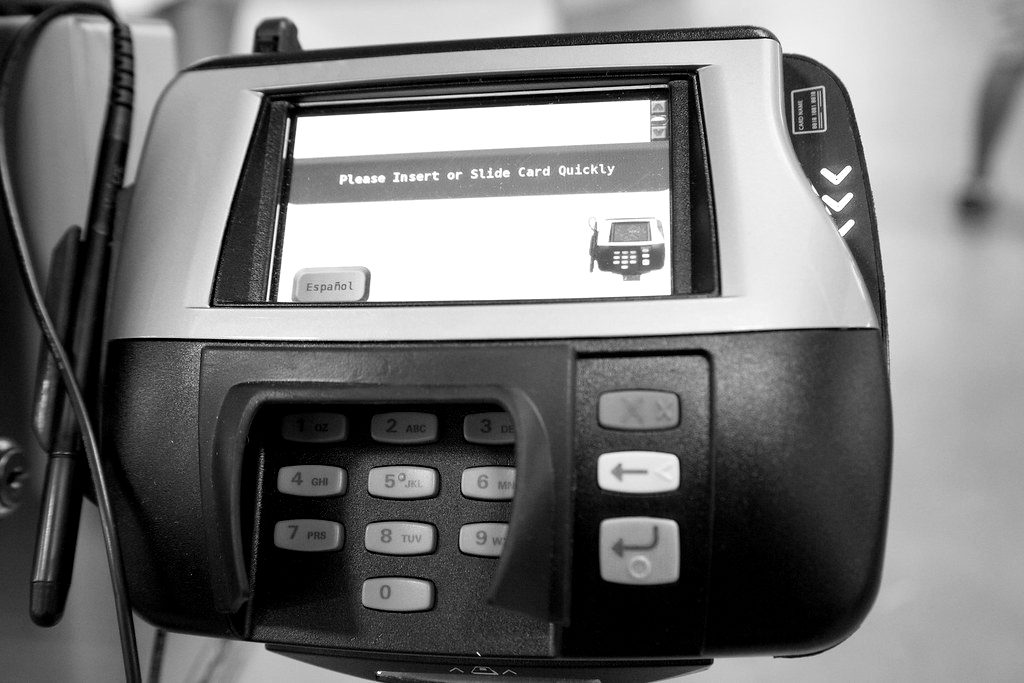
Authorization. The terminal sends the card details and amount to the acquirer, which passes them through the network to the issuer. The issuer checks that the card is valid and that funds or credit are available, then sends back approve or decline.
Clearing. The Philadelphia Fed defines clearing as the nonmonetary exchange of transaction information. The acquirer submits the final transaction details so each bank can record it. For signature-style "dual-message" transactions this typically happens within a day; for PIN debit, authorization and clearing happen together.
Settlement. Money actually moves: the issuer pays the acquirer, minus interchange, through the network's settlement process. The acquirer then pays the merchant, minus its own fees.
Who pays the fees on a card payment?
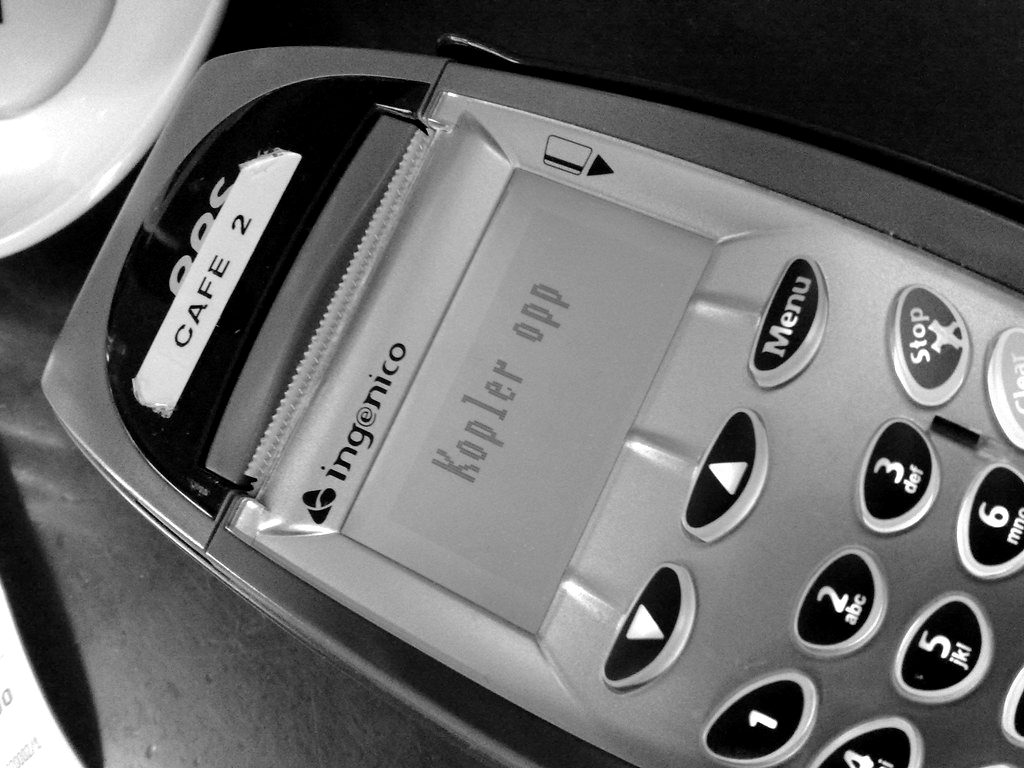
The cardholder usually pays nothing extra at the till. The merchant pays to accept cards, through what the Philadelphia Fed calls a merchant discount fee charged by the acquirer. A large part of that cost is the interchange fee, which flows from the acquirer to the issuer on most sales.
Some interchange is capped by law. In the US, the Federal Reserve's Regulation II limits debit card interchange at issuers with $10 billion or more in assets to 21 cents plus 5 basis points (0.05%) of the transaction, with up to 1 more cent for issuers that meet fraud-prevention standards. Smaller issuers are exempt, and US credit card interchange is not covered by this cap. The Fed's own data for 2024 show covered debit transactions averaged $0.23 in interchange (0.47% of the average sale), against $0.51 (1.21%) for exempt issuers.
In Europe, the Interchange Fee Regulation caps interchange on consumer cards issued and used in the region at 0.2% for debit and 0.3% for credit, according to the European Commission.
How are credit, debit and prepaid cards different?
All three travel over the same networks, but whose money is spent, and what happens when something goes wrong, differs.
| Feature | Credit card | Debit card |
|---|---|---|
| Whose money | The issuer lends it; you repay later | Comes straight from your bank account |
| Fraud liability (US) | Capped at $50 | $50 if reported within 2 business days, up to $500 within 60 days, possibly unlimited after that |
| US interchange cap | None under Regulation II | Capped for issuers with $10 billion+ in assets |
| Billing disputes | Written notice within 60 days under the Fair Credit Billing Act | Covered by different rules; contact your bank at once |
Prepaid cards draw on money loaded in advance. Their protections depend on the card's terms and on the rules for that product, so read the card agreement.
What can you do if a card payment goes wrong?
US law gives credit card users specific rights to dispute billing errors. According to the FTC, a billing-error dispute letter must reach your issuer within 60 days after the first bill containing the error was sent. The CFPB adds that the card company must acknowledge your dispute in writing within 30 days.
For lost or stolen cards, speed matters most with debit. The FTC explains that if you report a lost debit card within two business days, your loss is limited to $50; after that, up to $500; and if you wait more than 60 days after your statement is sent, you could lose everything taken from the account.

What mistakes do people make with card payments?
- Waiting to report a lost debit card. Liability limits widen with each day of delay.
- Missing the 60-day dispute window. Read statements every month, not only when you spot a problem.
- Assuming "pending" means final. A pending charge is approved but not yet settled; check the final amount on your statement.
- Accepting currency conversion at the till abroad without checking the rate. Compare the rate you are offered using our currency conversion fee calculator.
- Sharing card details by message. Treat any text or call asking for your full card number and security code as suspicious, and call the number on the back of your card instead.
Questions readers ask
Why do some shops set a card minimum or add a surcharge?
Because accepting cards costs them money through interchange and acquirer fees. Whether surcharges are allowed depends on local law and network rules.
How long does a merchant wait for card money?
It depends on the acquirer's terms. Settlement between banks typically follows within a day or two of the sale for signature-style transactions, and the acquirer then pays the merchant.
Is contactless less safe than inserting the card?
Your legal protections depend on the card type, credit or debit, not on whether you tapped, inserted or typed the card number. The liability limits described above apply either way.
Does a credit card cost me money if I pay in full?
Interchange is paid by the merchant's side, not added to your bill. You pay interest only if you carry a balance; see APR vs APY for how rates are quoted.
A card payment is approved in seconds but settled behind the scenes by banks and a card network, with interchange paid from the merchant's bank to yours. Credit and debit cards travel the same rails but carry different protections. Read statements monthly and report problems fast, especially on debit.
Sources
- Federal Reserve Bank of Philadelphia, Clearing and Settlement of Interbank Card Transactions: A MasterCard Tutorial for Federal Reserve Payments Analysts (2013)Primary source
- Federal Reserve Board via eCFR, 12 CFR Part 235 — Debit Card Interchange Fees and Routing (Regulation II) (2026)Primary source
- Federal Reserve Board, Average Debit Card Interchange Fee by Payment Card Network (2024)Primary source
- European Commission, Press release IP/19/2311 on interchange fees (2019)Primary source
- Federal Trade Commission, Lost or Stolen Credit, ATM, and Debit Cards (2024)Primary source
- Federal Trade Commission, Using Credit Cards and Disputing Charges (2024)Primary source
- Consumer Financial Protection Bureau, How do I dispute a charge on my credit card bill? (2024)Primary source
Educational content only — not financial, investment, legal or tax advice. Crypto-assets are high-risk and you could lose all the money you put in. Rules differ by country; check with your national regulator. See our risk disclosure and editorial policy.
Read next
- Glossary · Definition · Beginner
Interchange fee
The per-transaction fee paid to the card issuer, with US and EU caps worked through.
- Fintech · Intermediate
Instant payment systems: FedNow, Pix and UPI
How 24/7 account-to-account payments work, and how the US, Brazil and India built theirs.
- Fintech · Beginner
Buy now, pay later (BNPL) explained
How pay-in-four works, what late payments cost, why stacking loans matters, and the new UK rules.
- Tools · Calculator · Beginner
Currency conversion fee calculator
Total cost of a conversion: fixed fee plus the rate markup against the mid-market rate.