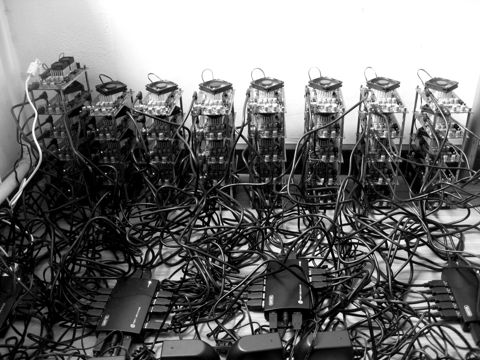
How does Bitcoin mining work?
Mining is not digging for coins. It is a global guessing contest that orders transactions and makes rewriting history ruinously expensive.
 Bitcoin
Logos are trademarks of their respective owners, shown for identification only. Their use does not imply endorsement. Licences.
On this page
- Bitcoin miners bundle pending transactions into a block and race to find a block header hash below a network target.
- The only way to find a valid hash is trial and error: change a number called the nonce, hash again, repeat — billions of times.
- Every 2,016 blocks the network resets difficulty so blocks keep arriving roughly every 10 minutes, whatever the total computing power.
- The winning miner collects the block reward: newly created bitcoin (the subsidy, currently 3.125 BTC) plus the fees of the transactions it included.
- Because a small miner might wait years to win a block alone, most join pools that share rewards in proportion to work contributed.
Bitcoin miners collect pending transactions into a block, then repeatedly hash the block header with a changing number until the result falls below a network target. The first miner to succeed broadcasts the block, other nodes check it, and the winner earns new bitcoin plus the transaction fees.
What problem does Bitcoin mining solve?
Bitcoin has no central bank or company deciding which payments are valid and in what order. Thousands of independent computers keep their own copy of the ledger. Without a referee, two things must still happen: new transactions must be packed into blocks, and everyone must agree on a single order of those blocks so nobody can spend the same coin twice.
Mining handles both. It turns the right to add the next block into a contest that costs real resources to enter. The Bitcoin whitepaper's insight was that if honest participants control most of the computing power, the honest chain will grow fastest, and an attacker would have to outspend all of them to rewrite it. That is why mining is the security system behind proof of work, not just a way of issuing coins.
What exactly are miners calculating?
A miner starts by building a candidate block. It picks transactions waiting in the mempool — usually favoring those that pay higher fees — and puts first a special coinbase transaction that pays the reward to itself. The block's summary, the 80-byte block header, includes a fingerprint of the previous block, a fingerprint of all the transactions, a timestamp, the current target and a 4-byte number called the nonce.
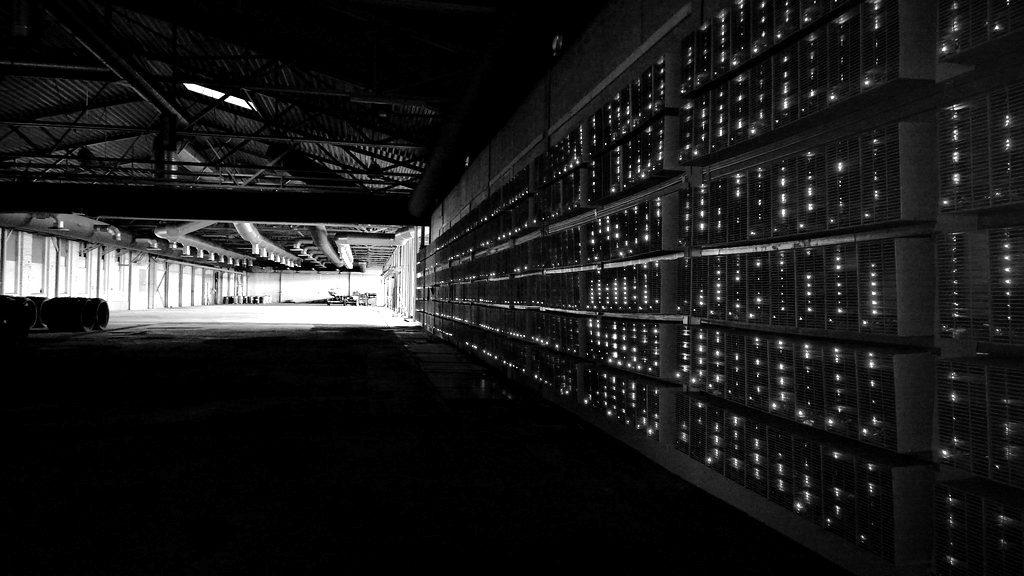
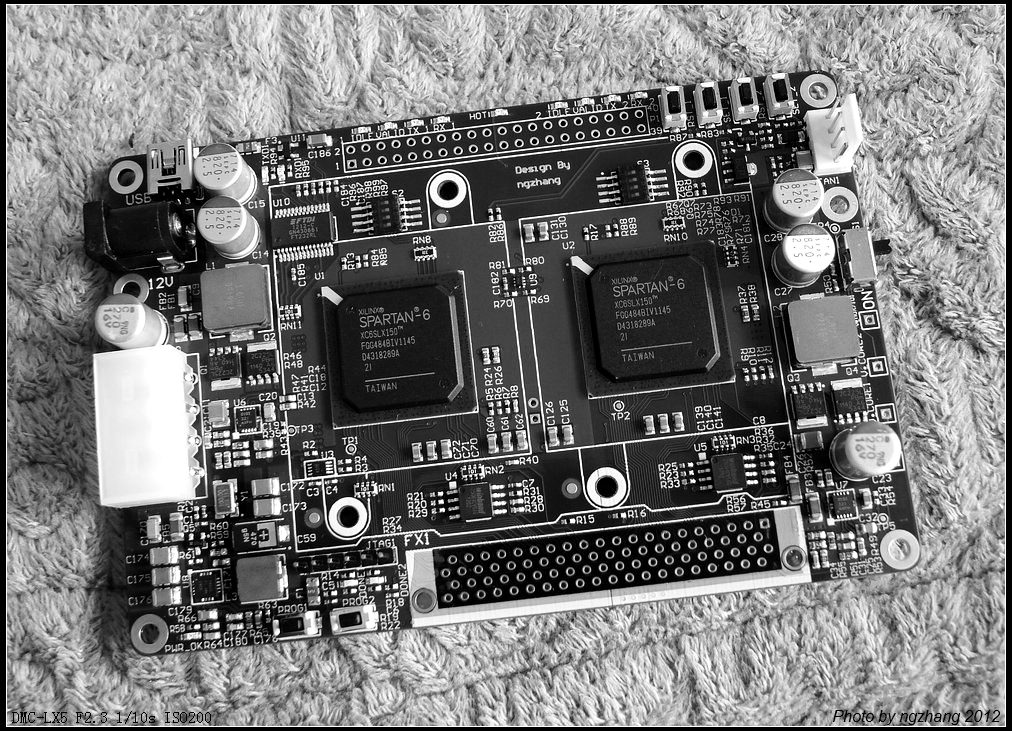
The miner then runs the header through the SHA-256 hash function. A hash looks like a random number; change a single digit of the input and the output changes completely. The block is valid only if its hash is below the target. If not, the miner changes the nonce and tries again. There is no clever shortcut, so the contest rewards raw guessing speed, which is why miners today use ASICs — chips built to do nothing but this calculation.
Gather transactions from the mempool and add the coinbase transaction that pays the miner.
Build the 80-byte header linking to the previous block and summarizing the new transactions.
Hash the header with SHA-256 and compare the result with the target.
Change the nonce and repeat. When the 4-byte nonce runs out, change an extra field in the coinbase transaction and start over.
Broadcast the winner. Other nodes check every transaction and the proof of work, then start building on top of it.
How does difficulty keep blocks near 10 minutes?
If more machines join, blocks would come faster; if miners leave, slower. Bitcoin corrects for this automatically. Every 2,016 blocks, each node looks at how long that batch took and compares it with the ideal of 1,209,600 seconds — exactly two weeks at 10 minutes per block. If the blocks came too quickly, the target is lowered so valid hashes become rarer; if too slowly, the target is raised. One adjustment is capped: difficulty can rise by at most 300% or fall by at most 75%.
This feedback loop is why the issuance schedule in the Bitcoin halving can be counted in blocks rather than dates: however much computing power joins, blocks keep a roughly steady rhythm. Bitcoin Core's own data shows an average of about 9.6 minutes per block from the first block in January 2009 to block 966,143 in September 2026 — close to, but not exactly, the 10-minute target.
Where does a miner's reward come from?
The whitepaper describes the incentive plainly: by convention, the first transaction in each block creates new coins owned by the block's creator. Today that block reward has two parts, as the developer guide explains: the block subsidy, newly issued bitcoin, and the transaction fees paid by every transaction in the block.
| Part of the reward | Where it comes from | How it changes |
|---|---|---|
| Block subsidy | New bitcoin created by the coinbase transaction | Fixed by code; halves every 210,000 blocks. 50 BTC at launch, 3.125 BTC since block 840,000 |
| Transaction fees | Paid by users whose transactions are included | Varies with demand for block space |
| Spending rule | Coinbase outputs are locked | Cannot be spent until 100 more blocks are added |
Bitcoin Core's code cuts the subsidy in half every 210,000 blocks. Because amounts are counted in whole satoshis (one hundred-millionth of a bitcoin), the subsidy rounds down to zero after the 33rd halving, at block 6,930,000. The whitepaper anticipated that once the predetermined supply has been issued, fees alone could fund the incentive. The 100-block lock exists because a block can be dropped if a competing chain overtakes it; Bitcoin nodes follow the chain with the most work and discard stale blocks.
Why do most miners join mining pools?
Mining is a lottery weighted by computing power. A miner with a tiny share of the network will, on average, win very rarely, and the wait is unpredictable. Pools smooth this out. The developer guide explains that a pool sets a much easier target for its members; any hash that meets it is a share, proof that the miner did a share of the work. When any member finds a hash that also meets the real network target, the pool collects the reward and pays members according to the shares they submitted.
The trade-off is concentration. ethereum.org lists the risk that mining pools centralize power as one of proof of work's weaknesses: if a few pool operators coordinate the work of most miners, they hold outsized influence over which transactions get in.
What mistakes do beginners make about Bitcoin mining?
- Thinking a home computer can mine profitably. The contest is dominated by ASIC hardware; the arithmetic above shows how long a small participant would wait alone.
- Believing miners can change balances or invent transactions. Every full node checks every block. Invalid transactions are rejected however much work went into the block.
- Confusing the subsidy with the total reward. Fees are a separate, variable part of what miners earn.
- Ignoring the 100-block lock. A freshly mined reward cannot be spent immediately.
- Signing up for "cloud mining" contracts on trust. Many are fronts for crypto scams; claims of fixed daily payouts are a classic red flag.
Questions readers ask
How long does it take to mine one bitcoin?
There is no fixed answer. The network as a whole produces one block about every 10 minutes, currently with a 3.125 BTC subsidy plus fees. How much any one miner earns depends on its share of total computing power.
What happens when all bitcoin have been mined?
Under Bitcoin Core's rules the subsidy shrinks toward zero over many halvings. After that, miners would be paid by transaction fees alone, as the whitepaper anticipated.
Is Bitcoin mining the same as Ethereum mining?
Ethereum no longer uses mining. It switched to proof of stake in 2022; see proof of work vs proof of stake.
Can two miners find a block at the same time?
Yes, briefly. Nodes keep following the chain with the most accumulated work, and the losing block becomes stale. This is one reason the reward cannot be spent for 100 blocks.
Bitcoin mining is a costly guessing contest that decides who writes the next block, with difficulty tuned every 2,016 blocks to keep a 10-minute rhythm. The winner earns the subsidy plus fees, and the cost of the contest is what protects the ledger's history. Treat mining as infrastructure to understand, and any offer of easy mining income with deep suspicion.
Sources
- Satoshi Nakamoto (bitcoin.org), Bitcoin: A Peer-to-Peer Electronic Cash System (2008)Primary source
- Bitcoin Project (developer.bitcoin.org), Bitcoin Developer Guide: Block Chain (2024)Primary source
- Bitcoin Project (developer.bitcoin.org), Bitcoin Developer Guide: Mining (2024)Primary source
- Bitcoin Core, Bitcoin Core source code: GetBlockSubsidy (src/validation.cpp) (2026)Primary source
- Bitcoin Core, Bitcoin Core source code: mainnet chain parameters (src/kernel/chainparams.cpp) (2026)Primary source
- ethereum.org, Proof-of-work (PoW) (2025)Primary source
Educational content only — not financial, investment, legal or tax advice. Crypto-assets are high-risk and you could lose all the money you put in. Rules differ by country; check with your national regulator. See our risk disclosure and editorial policy.
Read next
- Mining, Staking & Infrastructure · Beginner
The Bitcoin halving explained
The 210,000-block rule that halves new supply, the math behind the 21 million cap, and the price myths.
- Mining, Staking & Infrastructure · Beginner
Proof of work vs proof of stake
Two ways to pick who writes the next block — and what each one asks an attacker to put on the line.
- Mining, Staking & Infrastructure · Beginner
What is a blockchain node?
Full, light and archive nodes, what each verifies, and what running one for Bitcoin or Ethereum takes.
- Glossary · Definition · Beginner
Mempool
The waiting room for unconfirmed transactions, and how fees decide who goes next.