What is the bid-ask spread?
Every quoted market has two prices, not one. The distance between them is a cost you pay even when no fee is shown.
On this page
The bid-ask spread is the difference between the bid — the highest price a buyer or dealer will pay — and the ask — the lowest price a seller will accept. You buy at the ask and sell at the bid, so the spread is a built-in trading cost.
How do bid and ask prices work?
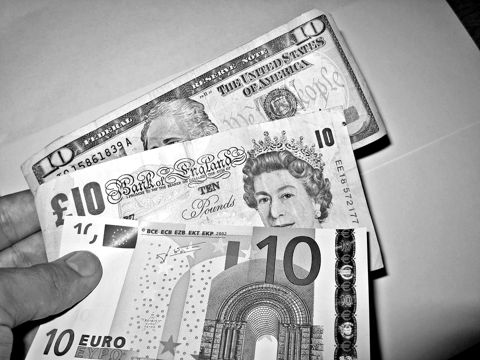
The SEC explains it from the dealer's side: the bid is the highest price a market maker will pay for a security, the ask is the lowest price at which it will sell, and the ask is normally the higher of the two — the difference is how the market maker earns. Its forex bulletin puts it from yours: the ask is what you spend to buy a currency, and the bid is the lower amount you receive when you sell.
| Quote | Who uses it | Example |
|---|---|---|
| Bid | You, when selling | $99.90 |
| Ask | You, when buying | $100.10 |
| Spread | Ask − bid | $0.20 |
| Mid-price | Halfway point, often shown on charts | $100.00 |
How much does the spread cost you?
Divide the spread by the mid-price to get a percentage you can compare across assets and providers.
Our currency conversion fee calculator turns a quoted rate into a percentage cost the same way.
Why can a "zero-commission" trade still cost money?
Because the charge can sit inside the spread. The SEC's forex bulletin warns that dealers who advertise commission-free trading may build their commission into a wider bid-ask spread, and it may not be clear how much of the spread is the dealer's mark-up. The wider the spread, it adds, the more it costs to buy and sell. Market orders make this worse in fast markets: Investor.gov notes the price you pay may not be the price you expected — on decentralized exchanges that gap is called slippage.
Spreads also tend to tell you something about how easy an asset is to trade; see market liquidity explained and volatility explained.
Questions readers ask
Who earns the bid-ask spread?
Typically the market maker or dealer quoting both prices, according to the SEC. On some platforms part of it is the provider's mark-up.
Should I use a limit order to avoid the spread?
A limit order lets you set the price you are willing to pay or accept, which controls the cost but means your order may not fill. It is a trade-off, not a free way around the spread.
The spread is the price of immediacy: buying at the ask and selling at the bid. Convert it to a percentage, compare it alongside any stated fee, and be wary of "no commission" offers until you have seen the quotes.
Sources
- US Securities and Exchange Commission, Spread (Fast Answers) (2026)Primary source
- US Securities and Exchange Commission, Investor Bulletin: Foreign Currency Exchange (Forex) Trading for Individual Investors (2011)Primary source
- Investor.gov, US Securities and Exchange Commission, Market order (glossary) (2026)Primary source
Educational content only — not financial, investment, legal or tax advice. Crypto-assets are high-risk and you could lose all the money you put in. Rules differ by country; check with your national regulator. See our risk disclosure and editorial policy.
Read next
- Markets & Macro · Intermediate
What is market liquidity?
Tightness, depth and resiliency: how much it really costs to trade, and why liquidity dries up in a crisis.
- Tools · Calculator · Beginner
Currency conversion fee calculator
Total cost of a conversion: fixed fee plus the rate markup against the mid-market rate.
- Glossary · Definition · Beginner
Slippage
Why a swap fills at a different price than quoted, and how slippage tolerance limits it.
- Stablecoins & Payments · Beginner
Stablecoins and cross-border payments
The on-ramp, the chain and the off-ramp: where costs and risks sit when money crosses borders as tokens.